
This was supposed to be the video that launched my “second life” on YouTube. I discussed about the affects of marine debris in the biological and ecological point of view. The intention was to shed some light on the more obscure issues that aren’t typically explored- at least in depth when this topic is reviewed by popular media. However, I believe I completely flopped my approach to the video. Ignoring the possible angles I could have explored in regards to the research… the presentation is a complete disaster. When it comes to education and awareness, the weird comedy approach eliminated much of the urgency of the situation. Not only that, I don’t think anyone would care about the species I presented. It was a complete mess! And I could criticize it all I want- and I definitely will take the time to do so in the future… I’d like to share the result of this project before it was scrapped a couple months after its conception.
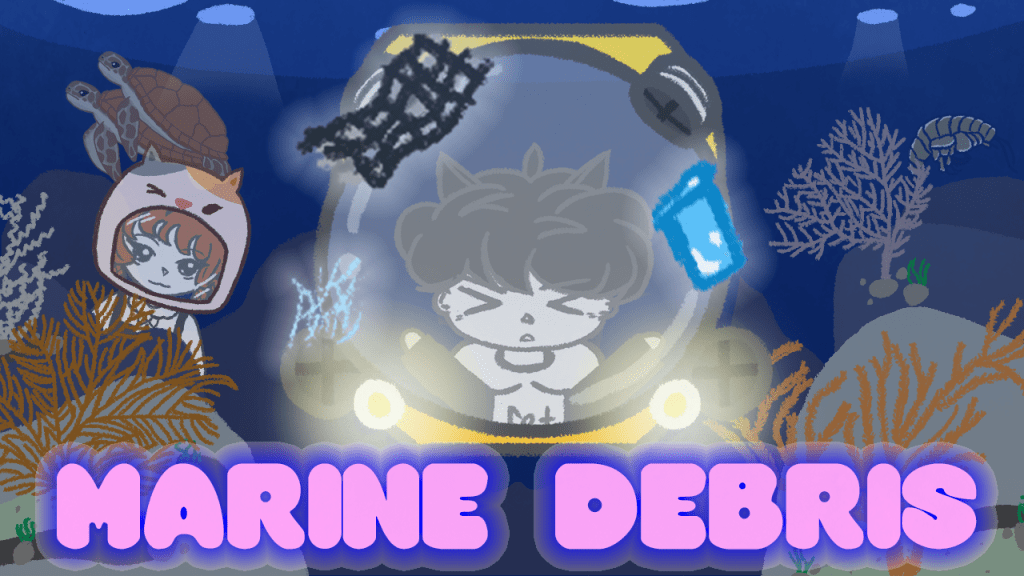
The above image was supposed to be the thumbnail for the video. Click here to watch it- what’s left of it…
Script [draft 1]
An ROV exploring the depths of the Northwest Mediterranean sea stumbled upon a goddamn rope! Bruh, not again- why is there so much litter, even at these depths? We even found arthropods with micro-plastic in their bodies at the hadal zone! We named the species “plastic”! There was even a toilet found at a pristine reef! Come on, this has to stop. I mean, look at this, these things can… wait what? IT’S ALIVE???
Okay no, it’s not alive… but there are things living on this polyethylene terephthalate… or “PET” for short- or just call it a strapping band. A paper published by these kind folks noticed the protected species of sponge, nicknamed the carnivorous sponge, was found creating a little neighbourhood on literally litter!
Now, we know about the negative effects of plastics and debris on marine life- where it can impair feeding, reproduction, and eventually cause death. But apparently, it can be useful for some sessile species like coral and sponge to attach to and enjoy the abundance of nutrients above the benthic. This may be the case for individuals living in unfavourable conditions. Which is probably why we found 31 carnivorous sponges all clumped together on this rope, some literally fusing their heads together.
Apparently this species of sponges are scarce and rarely populate in such a great number, so it’s quite interesting how they gathered on this suspended rope (20 m) and appear healthily developed. So this means we should dump our trash into the ocean!
NO you fools! It means we don’t necessarily understand the full extent of the effects plastic and other debris have on marine life. While it may seem quite beneficial, especially for these types of organisms- it can cause issues for other species that may tangle themselves in the rope, accidentally consume it in the process of eating the inhabitants on the rope, and THE ROPE, if suspended in the water column where waves can transport it for miles- can bring invasive species to other habitats! Like the zebra mussel that was transported from eastern Europe and western Asia to Canada in 1988.
Thus we should continue researching about the situation and perhaps find alternatives to the seemingly positive effects of marine litter. Don’t just drop anything into the ocean. Work with knowledgeable groups and organizations and make things like artificial reefs. Don’t jump to conclusions and correct me if I’m wrong!
The initial concept for this video was a sort of 1-2 minute YouTube shorts thing- that’s why “draft 1” is so short. It also only touched on a single paper [1], which was the initial inspiration for this series. I wanted to make videos based on whatever interesting things I come across. I’m still doing that, but I decided to make these videos a little more extensive than a coverage of a single paper.
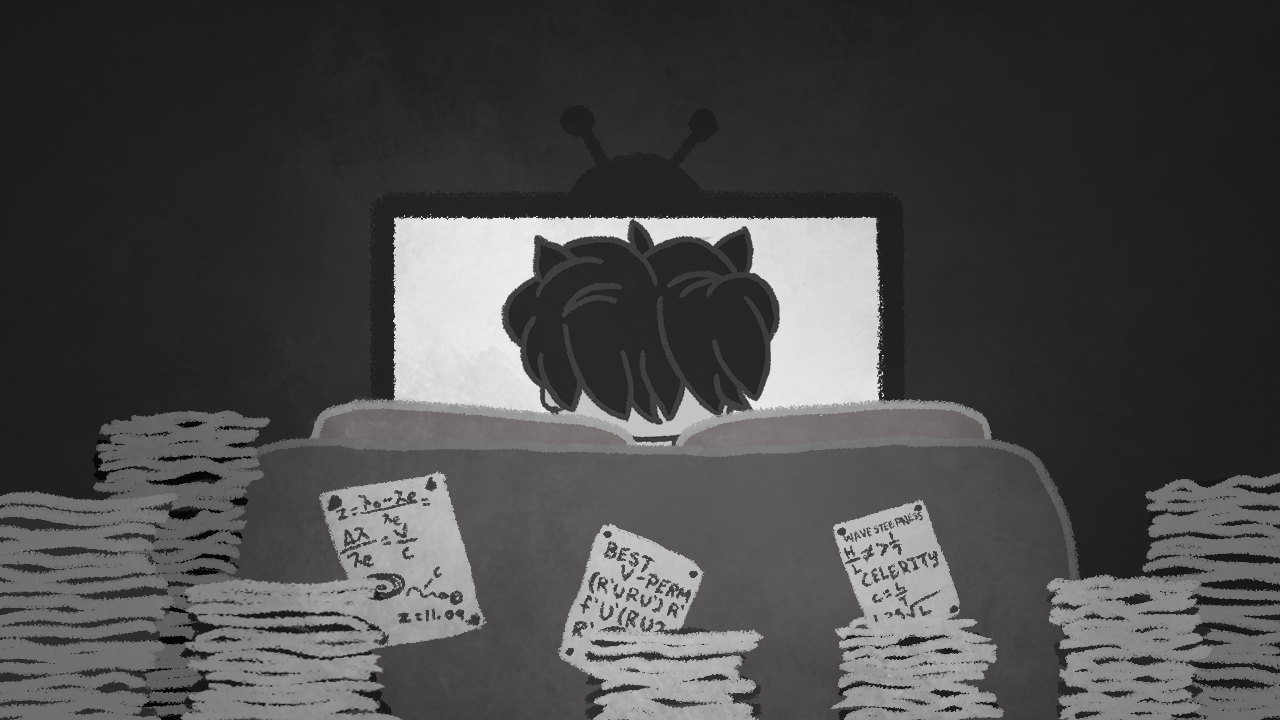
My current project is a freewrite about the concept of… being sure? Completely sure, and only making decisions based on this sort of view; when sufficient data is available. The video explores an anime, a short story, some scientific concepts- it’s just a little rant, a feeling I had after watching something. I don’t want to explain it all here, but that’s basically the gist of my current project(s)- a collage. Here are some graphics I made for the video:

Anyways, the initial draft was “test” of sorts- a way to practice my style before heading towards more ambitious projects. I won’t show the other revisions as they extend to two pages. But have a look at the citations I gathered for this video. I wanted to make them somewhat appealing, so I added little comments:
Citations
- This paper is about carnivorous sponges (specifically Lycopodina hypogea) inhabiting marine debris. Since it isn’t open access, you will have to be associated with an institution (that has access to it) or purchase/rent the paper. It’s quite interesting and is the primary source to this occurrence, so give it a read if you have the chance!
[2] See the Mind-Blowing Super-Freaky Rainbow Fish from the Twilight Zone
- In this news article, Luiz Rocha and his team reportedly found fishing lines and plastic, even a toilet seat on newly discovered reefs in the mesopelagic. Additionally, they discovered a rare species called Sacura speciosa, whose common name is “Mind-Blowing Super-Freaky Rainbow Fish”. Quite a name, but surely a memorable one. In the video I used this as an example of “bad naming” from scientists, but honestly I don’t mind. It’s funny!
- The discovery of a new species of amphipods which… has microplastic in its body. Apparently this gained a lot of press and helped the deep sea gain more recognition. The researchers gave the new species a name that represented its unfortunate situation: Eurythenes plasticus. Get it? Plasticus. The paper is open-access, so you read it without any restrictions! But it’s a description of the species rather than a discussion about plastic in the deep sea. So… it might be a bit hard to comprehend!
[4] Using expert elicitation to estimate the impacts of plastic pollution on marine wildlife
- An analysis of the effects of marine debris on 3 major marine taxa: seabirds, sea turtles, and marine mammals. The results are discussed to be biased to observation, being that entanglement is the easiest to observe- while ingestion and contamination is difficult to quantify. Especially with newly discovered species, their base functions could be unknown due to the effects of contamination. This is a nice open-access paper studying an important issue. It provides a more in-depth analysis and discussion on the issue, so give it a read!
[5] Scavenging as a pathway for plastic ingestion by marine animals
- “Plastic pollution in the world’s oceans is ubiquitous.” Yes, I took that line from the paper and incorporated “ubiquitous” into my script. Anyways, we know that plastic is “ubiquitous” in the world’s oceans, but which species are most vulnerable? This paper analyzed whether the scavenging feeding behaviour led to a greater in-take of plastic. And which species would be the best indicator of such? The famous green sea turtle! Anyways, I’d like to see a wider overview of species as some seem to have adapted to the abundance of microplastics- such as copepods (which I will discuss in [14]). But this is an interesting paper!
[6] Sea Turtles (HD) | JONATHAN BIRD’S BLUE WORLD
- The life cycle of the iconic sea turtle! This channel helped me experience the “wonders” of the ocean without… well, going there. It’s presentation doesn’t fit my taste, but I appreciate how well-informed and easily accessible it is. My sister loves watching Jonathan’s videos!
[7] Seagrasses in the age of sea turtle conservation and shark overfishing
- Examining seagrass meadows with variables of sea turtle (grazers) and shark (sea turtle predation) population. This paper tackles sea turtle conservation in a light that considers the aspects we have to closely examine before replenishing populations. Sea turtles are important grazers that maintain stable growth for seagrass, and mitigate epiphytic algae. However, it’s important to know when there’s an imbalance. Open-access! Give it a read!
[8] Sea Turtles as Biological Transporters of Nutrients and Energy from Marine to Terrestrial Ecosystems
- A quantitative and qualitative analysis of sea turtle nests as nutrient distributors. This study observes turtle nesting grounds (Archie Carr National Wildlife Refuge at Melbourne Beach, Florida)- examining the interactions and nutrient uptake between the subject and ecosystem.
[9] Invasive Species | JONATHAN BIRD’S BLUE WORLD
- A cool video where Jonathan Bird has a first-hand look of the lionfish invasion. Additionally, check out [25] for more information.
[10] Nature Conservancy Canada: Zebra Mussel
- This “invasion” is also local to my city. Every time I visit the beaches and ports, these zebra mussels can be seen everywhere!
[11] Increasing jellyfish populations: trends in Large Marine Ecosystems
- For the jellyfish-plastic section of the video, there is an info section on the left. It talked about the taxonomic concerns regarding the naming of “jellyfish”. For more detail, this section can be found in this paper under “Taxonomic concerns”.
- I used this paper for a comparative table of a known species and an unknown contaminated one. Quite interesting learning about reproduction. I might want to make a video on this topic in the future honestly.
[13] Oyster reproduction is affected by exposure to polystyrene microplastics
- These next two papers reveal the effects of plastic exposure. I really wish I went into depth with these, but I didn’t exactly organize this video well. No matter, I think I’ll review these papers in future videos.
- Same comment as the last citation, however there was an interesting phenomena with these copepods. “However, the change in prey size seen here suggests that the copepods are altering their feeding strategy to avoid ingesting microplastics. Filter-feeding copepods, including C. helgolandicus, can demonstrate limited feeding selectivity.” Very interesting!
[15] Porifera: Life History and Ecology
- This is probably unnecessary, but I was trying to find out whether the Lycopodina hypogea (carnivorous sponge in the video) are hermaphroditic or gonochoristic. This page says that “Most poriferans that reproduce by sexual means are hermaphroditic and produce eggs and sperm at different times.” I don’t really trust this source, and I couldn’t find much (or understood) the 3 citations it had.
[16] Spermatogenesis in the carnivorous sponge Lycopodina hypogea (Porifera, Demospongiae)
- After failing to find information in the previous citation, I tried to find something more specific to the species. This paper is about spermatogenesis in the Lycopodina hypogea, and… it still didn’t tell me if the species was hermaphroditic or not. So I looked for one more source.
[17] Spermatogenesis
- An overview of spermatogenesis, which distinguishes the difference between male and hermaphroditic spermatogenesis processes. But, I still didn’t understand the content. The paper talked about how “The hermaphrodite germ line differs from that of the male because it ceases spermatogenesis and switches to oogenesis during the adult stage”, “Male-derived sperm are substantially bigger than hermaphrodite-derived sperm”, and many other things (that I had a hard time comprehending). I thought I could derive a conclusion if I understood the differences, but honestly… I don’t know. If someone knows whether Lycopodina hypogea is hermaphroditic or gonochoristic (or something else), please explain in the comments with whatever source you can obtain!
[18] A new species of carnivorous sponge (Demospongiae: Cladorhizidae) from a Mediterranean cave
- The first description of the species featured in this video, Lycopodina hypogea. It was initially proposed with a different name, but was later changed to fit its descriptions. Figure 2 in this paper is honestly quite captivating, so I recreated it (poorly) in the video. But seriously, look how clearly you can see its lateral filaments!
[19] Deep-water sponge fauna from the mud volcanoes of the Gulf of Cadiz (North Atlantic, Spain)
- Additional sighting/description of Lycopodina hypogea.
- This paper outlines the threat invasive lionfish pose on the Atlantic and Caribbean coral-reef communities. I used this to create the web at the end of the video. And honestly, this paper was quite interesting- something that really goes into detail about the invasive species.
- This and the next paper was used to describe marine snow. It’s actually quite interesting as this is the main food source of the deep sea- I hope to make a video on this one day.
[22] Characteristics, dynamics and significance of marine snow
- What above said ^
[23] NAS – Nonindigenous Aquatic Species
- Cool database that outlines the location and impact of an invasive or nonindigenous aquatic species.
[24] Green Turtle | NOAA Fisheries
- I needed to find the diet of the Green Sea Turtle, and found this “Green turtles are the only herbivorous species of sea turtle. Their diet mainly consists of algae and seagrasses, though they may also forage on sponges, invertebrates, and discarded fish. The East Pacific green turtle tends to eat more animal prey than other populations.”
[25] How Florida is handling invasive lionfish
- What can we do about the lionfish invasion? It’s not like we can just eat them away… right?


Leave a comment