
“When he was a child, he thought the world was simpler. That there was no contest you couldn’t win. That hard work would be rewarded. That anything was possible. What he believed as a child, still foolish and ignorant – looking at the world with cloudless eyes – was it wrong?”
[1] No Game No Life – Light Novel Vol. 6
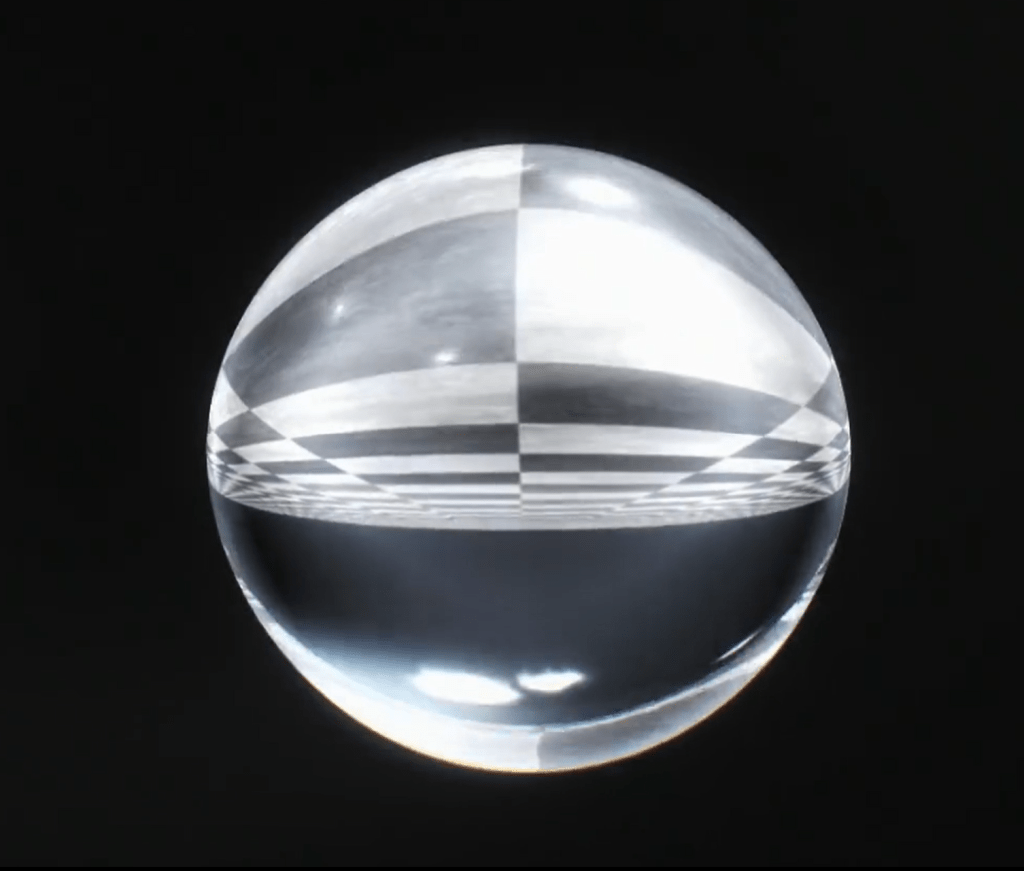
One of the incredible aspects that contributes to the success of films is soundtrack- a symphony that accompanies the visual-narrative formula. Yes, that sounded very romantic of me to phrase music in such a way… however, it’s something that I’ve often gazed upon with an aesthetic lens. I’ve put little time into wondering about the components that ensure a “good” song, merely just listening to it as they are- in the words of CDawgVA from Trash Taste: “beeps and boops”.
However, just as anything that exists in the plurality (am I using this correctly?) of this universe, music- sounds as they vibrate, echo, and are interpreted; they come in a variety of meanings based on the receiver’s system. Just as a dog’s sense of smell can provide it with a “vision” of the world unfamiliar to the human perception, or the various depictions of stars in different wavelengths. Some glimmers of redshifted galaxies considered dead, or with further inspection- they’re just interfered with dust. And some perceive a complex world of chaotic nightmares and sporadic ends, others… a game where we’re all pieces on a board, just working our way towards a goal- a dream where the blocks stack and the roots connect. Or perhaps those are bounded together despite the differentiation? And so, my hope is to provide a perspective (whether new or similar) that you can apply to what you already know. That is: my own perspective. And hopefully in this experience you may feel the urge to share your own! Comments are open!
In today’s blog post, I would like to share a little project I’ve been taking small jabs at over the past few months. My intention is to create a complete video with mini blog posts to accompany as further readings (chess, OST, narrative, themes and etc anaylsis). This is a personal goal to understand this media that has been fluctuating in my mind since I first encountered it nearly 4 years ago. And to start things off, I’ll share a quick analysis of No Game No Life Zero’s (the movie) first track: “Prologue Determination“
As I have zero musical education, I will try my best to utilize my literary skills to justify my closed-reading of these beeps and boops. Additionally, I just want to talk about this as a someone who has grown a tight relationship with the series. And just a heads-up: I will be using context from the film and light novel series (volume 6 at most) to explain certain parts of the analysis. I assume you readers will have already watched both the TV show and film, but I recognize the inaccessibility of the light novel. So I will highlight any possible spoilers, and also any parts from the source material that was cut off in the anime adaptation.
Another thing that may be of inquiry: I believe the value of analyzing anything in various contexts, including my current exploration of No Game No Life Zero’s OST through the lens of the narrative. As a literature major, that’s my best approach with my limited experience. There is additional value in trying to reduce the amount of external influences in a piece of music- I understand the extensive critical frameworks over the past centuries revolving around the consumption and presentation of media. There was a most notable discourse in the Victorian era with the boom of literary consumption. Discourse continues today. However, we don’t only have two eyes (metaphor for perception… LOL). If you have your own thoughts, please share it! But allow me to speak to you in my own “language”, show you my experience and hopefully you’ll have an additional lens to look through.
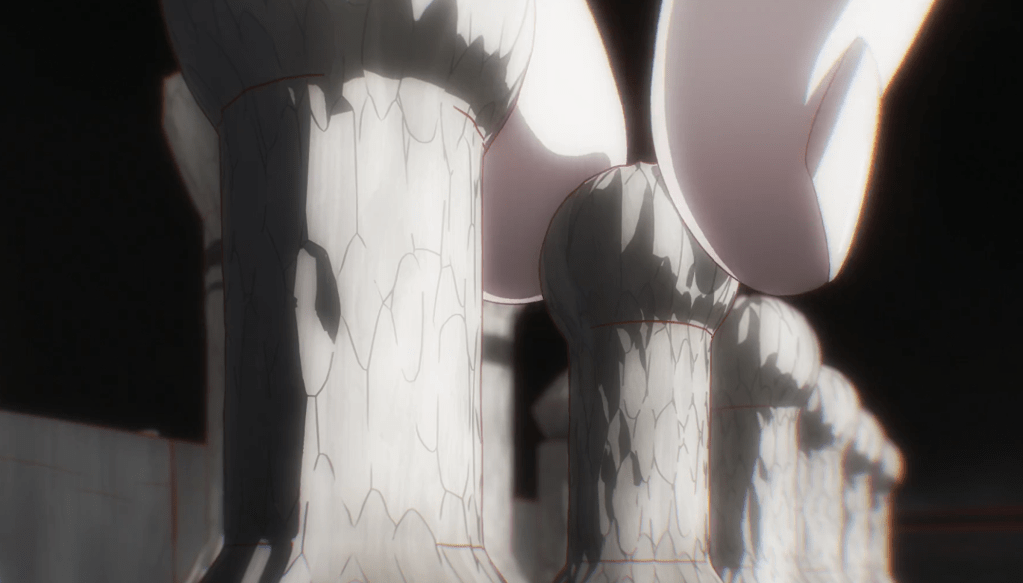
“Once they grew up, everyone naturally drifted away from games. Why? Because they didn’t have time? Because the world wasn’t as simple as games? Whatever the reason, when people grew up, games were inevitably discarded as childish things…”
[1] No Game No Life – Light Novel Vol. 6
Track 1: “Prologue Determination“
Unfortunately, I’m a poor University student. Uploading audio to my blogs costs a subscription plan, so please listen to the soundtrack through these links. Here is the individual track and here is the full soundtrack.
So what’s the deal with this track? First of all, take note of the two major instruments: piano and violin. These two sounds indicate the emotional and directive expressions of the characters, and seem to be associated with the main characters Riku and Shuvi. Acknowledge that they are associated, not necessarily a representation of them. Throughout these blog posts, I will justify their relevance as they continue to play roles in other soundtracks. But what necessarily is the sound of each of these instruments? Semantically in the context of the narrative, they seem associated to an idea.
The Violin
One of the common associations given to violins are their ability to mimic human voice. It’s especially noticeable when compared to the soprano formant. And according to the literature on the acoustic characteristics of the instrument, it isn’t necessarily a baseless association. A paper [2] examined how Amati and Stradivari violins produced voice-like features… but I’m not quite knowledgeable enough to understand the details. However, they included some background information regarding the results.
The modern violin was created by Andrea Amati in the early 16th century when the majority of public performing singers were males. This seemed to have influenced Amati’s development of the violin to exhibit vocal characteristics similar to the popular singers at the time. And we can see some evidence of this from a recorded quote in 1674 that the Italian violinist Nicholas Matteis “had a stroak so sweete, and made it speak like the voice of a man.”
Stradivari’s violins were developed later on and had a different resemblance from Amati’s violins. It “resembles nasalized, open-mid, front vowels corresponding to French words vin [~e] or peu [ø], sung by opera singers.” I have no idea what that means, but later in the 17th century, female singers began to appear on stage, gaining popularity by the end of Stradivari’s career. This acoustic evolution between Amati’s and Stradivari’s violins can be associated with the progressing popularity of female singers. Additionally, the trend can account for the concept of the famous violin pedagogue from the Baroque period, Geminiani (in 1751), that the ideal violin tone should “rival the most perfect human voice.”
Take that as you desire to interpret it, but it seems that there are some evidence that the violin is meant to resemble the human voice. And what exactly is in the human voice that’s so special to capture? In the context of No Game No Life Zero’s soundtrack, it seems to be emotion. We can define this ambiguous terms in multiple ways (I think), but for the convenience of this analysis, let’s consider it to be the raw instinct to survive. Perhaps in species cases associated with instinct, it can be adrenaline, fear, excitement, and whatever the situation might call upon from us.
With that, the most likely candidate to be associated with this instrument is the human (or the species of Imanity after the Great War) Riku. If you’ve ever socialized with a human being, you’d recognize that this emotion is sporadic, chaotic, random. At least with our inability to access all factors with our capacity for reasoning, emotion just seems like a mess. It can be linked to a gradual incline or decline, but can be sudden enough for us to not notice- like a stroke of the violin bow as it glides on the strings. It can peak to undetectable in a single stroke, or appear out of nowhere.
This is obviously just my attempt to associate emotion with chaos, then string it together to get chaos with the violin. It can definitely be interpreted and played differently, the instrument isn’t limited to any single theme- but in this case, I feel like this was the composer’s intentions (more on that later).
The Piano
Perhaps its a bit of a stretch to consider the piano to be the antithesis of the violin. It generally plays in a duet with it- being the perfect companion instrument. However, we can think about the nature of the piano as clunky, a “press” of a key. And obviously it’s not completely true, as with the characteristics I provided with the violin’s chaotic nature. These instruments can reflect different emotions and themes, play chaotically or orderly based on the musician’s intentions. But to draw a bit of distinction from the instruments in the context of No Game No Life Zero, they are in nature different in a structural sense. In the imagery of the violin, the bow generally glides on the strings, while a “hammer” strikes the strings on a piano. And we can consider this strike in a more monotone “click”, like a simple flick of a switch that can be associated to a computer. This is one way to look at the character Shuvi and how she is associated with the piano.
In contrast to the violin’s characteristics of emotion and “survive”, the piano is emotionless and methodical- a computation towards a devised goal, an outcome. As the Goddess Holou created the Ex Machina with the mission of answering the alluring questions of the universe; especially human emotions- which was Shuvi’s goal. They present an image of an orderly progression that isn’t hindered by “irrational” emotions- seeking the so-called “best outcome” relative to their goal. The world is like a simple game.
To reiterate, these characteristics are in the context of No Game No Life Zero and its narrative and associations in the soundtrack. In reality, these instruments and their interpretations are in the hands of whoever perceives them. Their characteristics can be whatever you want them to be in the closed space you provide it.
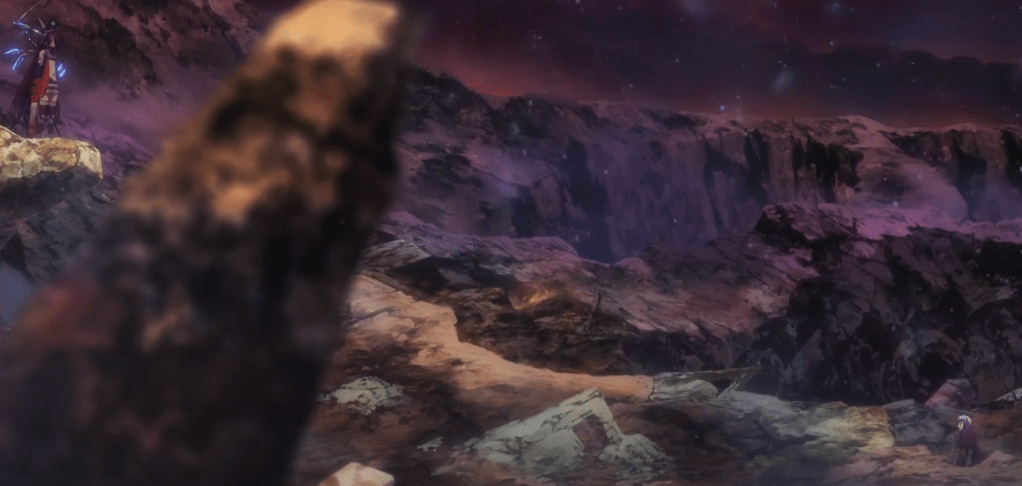
0:00 – 0:54
“The boy was alone – but he didn’t care. The world was simple and clean. Win, lose, or draw – that was all there was. And no matter the outcome – though in the end he always lost – he’d ponder how to win next time. That – was the boy’s world.”
[1] No Game No Life – Light Novel Vol. 6
The track begins with a piano striking its keys in a melody- echoing throughout Riku’s “world”, “in the cramped room” [1], his bubble. In this situation, the piano is associated with Riku in his youth as he currently lacks the acknowledgement of “outside the room, terror and uncertainty – the despair of those who couldn’t foresee even the day that would follow – froze the darkness of night” [1]. His focus isn’t on his survival nor the lives of his friends and family- they don’t play games. And the piano expresses this ideology of a simple methodical approach to reality as parts of a puzzle. Since he hides away in his room, the perspective, the sound of the piano- it echoes back at Riku, reaffirming his beliefs.
Here I would like to introduce an interesting idea surrounding the character of Tet, the One True God. The light novel introduces him as someone that appears if you “squint carefully into the darkness.” Throughout Riku and Tet’s chess games, Tet is depicted as someone- or should I say… something, that is better than you. He makes “a more correct move. A more excellent tactic! A more advanced strategy!!” This idea is that he is “darkness” itself in the cultural sense of the unknown, associated with fear and death. Tet in this instance can possibly be interpreted as the manifestation of something greater, beyond us- a thing that is unreachable due to our fears and complacency. That may be why he is considered a God of something so ambiguous as games or play. But more on that another time!
But as we progress to the next part of the track, everything suddenly falls quiet as we explore beyond Riku’s bubble. In the film, we have a quick shot of the bubble splashing or popping before the next sequence.
0:55 – 1:06
“But the outside world trampled his personal world mercilessly. – No warning.”
[1] No Game No Life – Light Novel Vol. 6
The sudden roar of an ensemble may contribute to the “no warning” in the quote above, as it’s honestly a sudden “ear rape”. But I’d also like to interpret the prior silence as a result of the deafening sounds from the outside world. This ensemble is characteristic of the intense chaos that stirs while Riku is focused in his own world.
Here we are introduced to the violin as it accompanies the ensemble to create a feeling of adrenaline. It represents the fear of the battle between the Dragonia and the Ex Machina, the humans below who are hopeless to evade danger. As the violin reaches the high note, it rips open Riku’s bubble- the piano’s echoes resembling the chime of a bell (indicating danger) as it fades out into reality. The bubble echoes sounds back to Riku no more- it was unsustainable, vulnerable to the outside world.
1:07 – 1:20
“Connecting heaven and earth – a column of light.”
[1] No Game No Life – Light Novel Vol. 6
Experiencing a different perspective on reality, an image of a sky split opened into a blinding light. Riku can only watch, humans can only scream. The violin screeches as they all hopelessly prays in fear.
1:21 – 2:00
“The world is chaos. Devoid of fate. Filled only with random happenstance. Unreasonable, absurd, and meaningless. Amid all that, where could one find…time to play games…”
[1] No Game No Life – Light Novel Vol. 6
When the dust settles, the violin is heard clearly, vividly crying and mourning. It resembles the changing perspective of Riku from an ambitious gamer, into a boy just trying to survive a tragic world. Accompanying the cries of the violin, a piano sneaks in a few chords- observing the melody played by the violin. This is Shuvi, the destroyer of Riku’s town. While fighting the Dragonia, she redirected the blast to eliminate the target. No regards for the humans that reside within the vicinity, “yes, to them, humans aren’t even players” [1]– only the method that can optimally complete the mission.
As the track progresses, the violin is accompanied by other instruments (maybe violins or similar instruments?) that overthrows the sound of the piano, eliminating it from the symphony. This can be interpreted in the context of the previous explanation as Riku’s rage towards Shuvi. Or perhaps the piano was in association with Riku’s fading thrill for games? The ensemble could represent the emotions of those who perished- fueling his rage and desire to survive over the methodical perspective.
2:01 – end
“Even so, next time, next time for sure…”
[3] No Game No Life Zero
Interestingly, this quote isn’t in the light novel. At least not in the exact form. But it thematically applies to narrative. Here, an ensemble plays with the notable instruments of the violin and… a piano? Or whatever that instrument might be, it’s reminiscent of a piano’s role and sound. The quote above regarding “next time” seems to be a response not from the desire to survive, nor the desire to play again. Actually, it seems like it’s both. What is “next time” anyways?
Riku states that “even so”, despite the harsh reality that destroyed his blissful world of simple games, despite the world of games causing him to turn a blind eye to the survival of his people… even so, next time–
I’LL CONTINUE THIS NEXT TIME! HAHAHA!!
Citations
[1] No Game No Life [Light Novel. Vol 6]
- For this short analysis, all the quotes I gathered were from “Opening Talk”- basically the prologue to the volume. It contained no spoilers from the un-adapted sections of the light novel, however the quotes provided additional context that the anime left out.
[2] Acoustic evolution of old Italian violins from Amati to Stradivari
- This paper provided an overview of the literature describing the associations of the violin to mimic the human voice.
[3] No Game No Life Zero [Anime Movie]
- This analysis included one direct quote from the movie and provided the soundtrack accompanied by visuals. The associated scene that I analyzed is from 0:00 to about 2:30~ in the movie.


Leave a comment