
In the last blog post of this No Game No Life Zero “musical analysis by a rando dude” series, I suggested the idea of character-instrument association. Apparently it’s called “leitmotif”: a repeating melodic phrase in music that is used to represent a character, setting, emotion, or theme [2]. It was a fascinating concept when I first encountered it, and I’m still attempting to justify this correlation. However, I’d like to add to my analysis by extending the reach of both the violin and piano as identities themselves. Perhaps they may often associate with a character and situation at a particular time, but they are themselves emotional expressions that evolve throughout the course of No Game No Life. Sometimes they will play the same melodies as each other- despite me having previously stated their opposing nature. I said the violin associated with a more human-survival instinct, while the piano was mechanical and tactical. Sure, that may hold up in most cases, but please ensure that throughout this journey we aren’t bound by these ideas.
I’m mostly saying this to reiterate that I’m not musical professional, nor am I equipped with adequate knowledge to thoroughly analyze music. But, these are my observations that I’d just love to share! The two instruments (violin and piano) seem to be so prevalent in each track of the film that I believe their presence to suggest something. And while I may have considered them to be associated with certain characters and ideas, they could as-well be characters themselves. But, it’s more likely that they represent certain emotional perspectives to each situation that occurs in the story. I’d like to hear some thoughts on this as we move along! For now, let’s continue the game!
Click here for the link to the full soundtrack!
Track 2 – Let’s Play A Game God
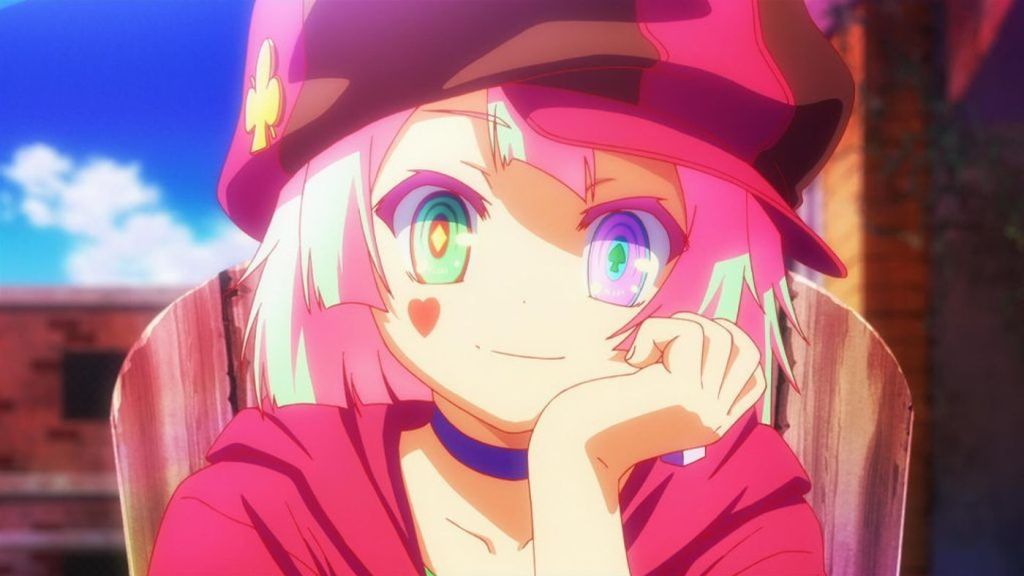
“-So, just what was the One True God doing in a place like this? He was just…killing time.”
[1] No Game No Life – Light Novel Vol. 6, Opening Talk
I have to preface that I’m not just going to analyze the music as it’ll lack a certain depth that can be achieved with the associations of the film/novel. For each soundtrack, I will be referencing their respective scenes and chapters to get a sense of the presentation they were intended for. With that said, I really don’t have much to say about this track. It’s a complete contrast from the war-raging cries of the previous “Prologue Determination“. However, there are a couple interesting characterization moments that I’d like to remark.
The film made a couple changes in order to preserve the pacing of the film (and to give Tet that awesome “Even so… It’s a story I, alone, can’t forget”). However, the light novel included some context for Tet’s random chess game against Izuna. Actually! They weren’t even playing chess in the light novel, “One hour. They’d played cards until Izuna had racked up nine losses and no wins” [NGNL Vol. 6, Opening Talk]. How’s that for failing to adhere to the themes of the narrative? Perhaps for practical reasons, they could only carry a deck of cards on them? Although having chess at this particular moment would complement the story Tet tells. But regarding his presence among the mortals, apparently he was just bored. He morphed into a human (or a member of immanity) and then walked around for a couple days while not eating for… “the hell of it”. He intended to pay Sora and Shiro a visit, but Izuna found him almost dead on the road and offered him some food. But here’s the interesting part, it was free and he declined because… he’s the God of Play! He wants to play for it!
Or well… he eats the food while offering to play a game in exchange, so I’m not sure how well this idea will hold up. However, as the creator of the covenants that require disputes and exchanges to be decided by games, he surely would like to push for this rule. An act of generosity from Izuna is humbling, but for Tet- it could be “fun”. He finds this competitive aspect of games to be exciting, enough that it embodies the reality he lives in. Normal situations can be made relatively thrilling with a challenge, and so perhaps Tet desired to have exchanges met by a game. Consider Izuna just giving food generously- it’s just something she wants to do. An act of kindness is enough to satisfy her. But for Blank and Tet, it seems that games provide thrill- no, order in their lives. It justifies kindness, and so they’d prefer if actions are constructed from the result of a process of quantifiable exchange. Perhaps these desires for kindness just don’t make sense otherwise?
It’s definitely possible that Tet just knew Izuna loved playing games, so he offered it in exchange. However, these ideas should probably be considered when evaluating the characters of Blank and Tet. For them, games are a way to construct a reality that makes sense. It can’t be as random as an act of kindness or evil out of nowhere. Especially for Sora, he’s considerably sharp when observing a person’s motives. But I feel like the story is heading towards establishing the notion of accepting chaos as fundamental in reality. Though, I’ll just leave it at that before I move towards spoilers.
Track 3 – I’ll Tell You A Forgotten Myth ~The Infiltration
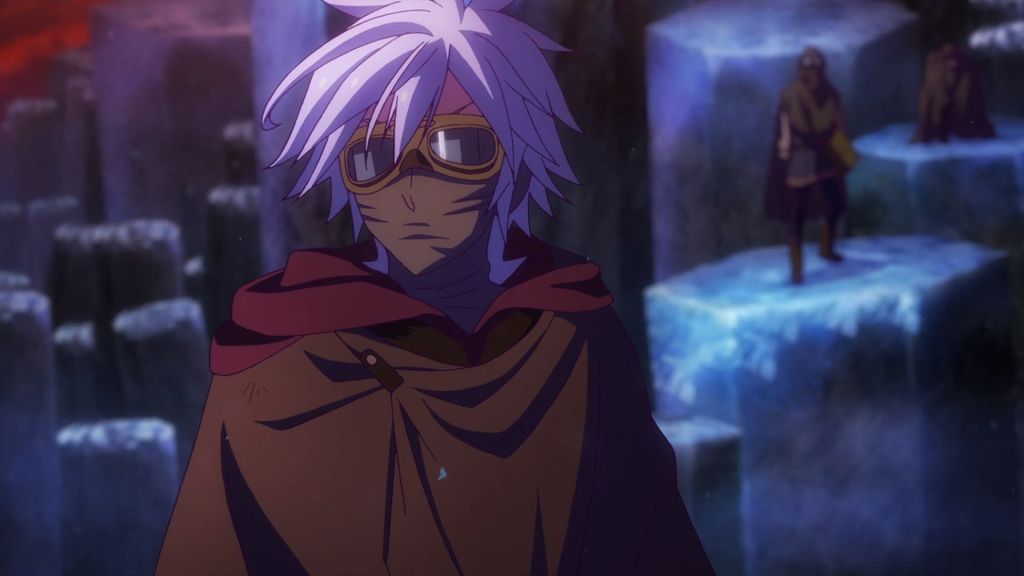
“-the One True God began his tale- Once upon a time… “There was a stupid, stupid…big old war, they say-“
[1] No Game No Life – Light Novel Vol. 6, Opening Talk
There are two parts to this song. The first plays the melody of the main theme as Tet introduces the story of the Great War.
0:00 – 0:04
Immediately as Tet begins the story and scenery shifts into a foreign world of black ash and blood red skies, the piano enters… and then is played in reverse?! This is quite evidently an indication of going back in time- 6000 years before present, when the Great War roared nearing its end. Using this technique with a piano seems practically easier to recognize, but it’s interesting to consider this through the lens of the instrument’s thematic relevance. I suggested the idea that the piano symbolizes a certain game-like aspect, a technical and organized direction that characterizes the concept of games. It’s pretty ambiguous and vague, but I like to think of this part of the soundtrack as if through games: we can recall the events of the past. Many games have a historical aspect to them that we often don’t consider. Tet in the film holds up the King chess piece before he begins telling the story, and this is when the piano is heard. It’s far-fetched, but looking through the activities we do today, the traditions and habits, celebrations and art- especially the games we play, the board games or adhering to our organized societal lives… they’re quite the window into the past, right? I guess in this sense, everything is.
Think about it this way, Tet says “But this story, you know, it’s not the one you hear everyday” and “this is a myth that’s never told” [1 – Opening Talk]. The story he tells is the origins of Disboard as a realm of games. Everything that is common, the things one hears and sees everyday- they are preceded by something relatively irregular and overlooked. This is the strike of a piano as it is played back in reverse. It symbolizes the familiar game they play- but it’s past and nature aren’t as simple as what you see at face value. Although it’s quite much to dissect from this simple part of the song, I like to consider these themes throughout No Game No Life. It’s something I’ll regularly look for throughout this series!
0:05 – 0:09
After the piano, we hear a repetition of this melody (is it a piano? I have no idea what instrument this is). But, why does it fit so well with the passing of time? Perhaps some musicians can provide their input here, but this repeating stable flow of 4 notes sounds like progression. Or actually, it sounds like time being reversed?
0:10 – 0:31
And here enters the violin! The last time we heard it, the violin played in a tragic tone- as if crying. In this song, we can see that its not necessarily a representation of those emotions. It is closely associated with it as that’s perhaps its nature to present such emotions. It can play different melodies and in different tones depending on the situation. But to examine it’s intent, we can observe the characters and scenes associated. In this specific scene, it’s the opener to the ghost story of Riku and Shuvi.
I don’t want to go too in-depth as this melody will be heard in other tracks that provide it greater relevance (remember this!). However, this melody being played in this specific context sort of elevates its scope. It’s the opener to the tale that Tet tells. But, that’s all I’ll say until we hear this again.
Although I’m not done. At 0:18 and 0:29 there’s a violin briefly played in the background. This can be heard throughout almost all of the epic and loud soundtracks (idk how to describe them). What do they entail? Well, it’ll be easier to describe it when the story is further developed. For now, keep an eye on these two features!
0:32 – 0:45
The main theme of No Game No Life Zero makes it’s entrance! But not without some interesting features. Before it plays in all its glory, the strike of a single note on the piano can be heard- perhaps introducing this new melody? As we’ve established, the piano has a significance in all the soundtracks: presenting the themes associated with games. This vague concept I’ve boiled down to its fundamental parts of organization is the role the piano will often play. In this context, what do you think? An interesting trend we’ll see is that the piano often has the spotlight for just a second, before a grand ensemble proceeds. While it doesn’t necessarily seem significant- it sort of just sounds nice. Personally, in the lens of the themes I’m evaluating the music by, I believe the piano to be collecting all the instruments together, setting the stage, the rhythm- before all the instruments work together. Again, the piano is essentially the concept of organization that forms a path in the valley of chaos. While this isn’t necessarily what it’s limited to, it’s my interpretation of No Game No Life’s take on games- or specifically Tet’s. And we’ll explore this idea as the story progresses.
But… did you notice that? When the piano plays that one note, the violin is faded into it. As if the violin originated from the piano. Or, maybe they’re not so different? We often try to create these categories and distinctions as an attempt to understand the physical and abstract worlds- and this isn’t necessarily inaccurate. However, we should try to acknowledge the resemblance and relations something has to another. Especially for the main characters of this story, they aren’t necessarily that different. Everyone fundamentally wants similar things as living beings, but we go about it in different ways. If there is an origin, we all came from it. If there is an end, we’ll all be there. Humans and the Ex Machina are especially the subjects to these questions of similarities.
Anyways, regarding the main theme… it’s the main theme. I don’t have much to comment on it- yeah it sounds epic! However, I like to think that is establishes the scope of the story as… well, a story. It is the “point” of this tale of self-proclaimed ghosts. It is the origins of the desire to create a world of games. Every time we encounter this melody, try to recognize how the story collects itself.
And the last we hear of this part of the soundtrack is… the violin. It plays this sort of sad tone? I’m really bad at identifying these things, but let’s consider it as “sad”. This establishes the next part of the soundtrack- into the tragic story. We’ll also hear this sort of fading of the violin in other tracks, proceeded by various themes and melodies.
0:46 – 1:12
From here, I’m going to sound like quite an idiot. I really don’t know my instruments- that’s why I mostly limited my analysis on the piano and violin (and I might even get those wrong!). There’s a specific sound in this part of the song, at around 1:08-1:09. It’s quite brief, but it comes back in many of the soundtrack. I like to associate it with the powerful in respect to the humans of the story. You can especially hear this instrument in Track 15 – Stale Mate Final Battle (when it’s most significant). It’s loud and crowds over the other instruments. In the context of this story, that’s its role. But, I’ll try to avoid talking about this as I’m probably wrong. However, I’m throwing this idea out there!
1:13 – 2:53
“Ivan faced Riku – their leader, whose name meant “Land” – standing at their point. The youngest among them – just a body – his expression hidden by his mask and goggles, betraying nothing. All that pierced the goggles were those dark eyes…as black and unreflective as night.”
[1] No Game No Life – Light Novel Vol. 6, Ch. 1
With that said regarding my lack of music knowledge, I’m going to particularly focus on the violin here. There are definitely things to comment on regarding the other instruments, but I feel a bit too incompetent to do so. I’ll leave those to the professionals. Anyways, the violin leads a lot of the melody in this portion of the song. It expresses the circumstances of the situation- Riku, Ivan, and Alei encountered the wreckage of a ship constructed by the Dwarves- “A remnant of the earthshaking “skirmishes” of recent weeks.” They were up “Against monsters with supernatural abilities that left humans in the dust…It wasn’t even funny”, even a single Dwarf, “Even if he’s on his last breath, we’ll more or less be done for”, “If a Dwarf held a catalyst and spoke a single word, it would be enough to turn hundreds of humans to dust” [1 – Ch. 1].
The violin expresses how hopeless their situation is. All humans could do was run and survive, scavenge and hide. For example, an interesting invention Riku and Couronne made was a spirit compass that detects large masses of “spirits harbored in the bodies of the gods and their relations” [1 – Ch. 1]. But it’s useless at the Dwarf wreckage because they were surrounded by too much black ash- basically dead spirits. I don’t know about you, but that’s quite something to digest. They use a compass that can’t distinguish between life and death- and when the needle points in a direction, you can’t be sure what it is. Is it a powerful being of wraith, or a graveyard of fading souls? To humans, it didn’t matter. It’s horror either way, no matter if they were alive or not. Yet, they needed to walk into the horror to survive. They needed to scavenge what they could- even if they were dead bodies. That’s how hopeless their situation was. No time for culture and fun, rules to live by, dreams to desire- only survival.
There’s an interesting melody played by the violin between 2:10 – 2:53. Specifically between 2:23 – 2:33 we hear the violin as if it were crying, expressing the sorrows of living in such a violent world. It’s hopelessness- a feeling where you return back to your instincts as a living being, desiring just to live day by day. In the anime, we see Riku reading the Dwarves’ transmission where they plan a fusion explosion. “How much do you have to damage this planet before you’ll be satisfied…?!” – Riku [3]. However, what’s particularly interesting is how this melody is used… later on- for a different purpose. Once again, remember this melody! I will refer back to this soundtrack!
2:54 – END
I don’t have much to say here, the violin is being used in its sort of horror-like fashion with the high-pitched screeches. But I will note the use of the violin at the end when its alone with the drum. Silence… only a sacrifice, the easiest option is considered for the intent of survival. “Yes – one would act as a decoy while the other two ran. That was their only choice” [1 – Ch. 1].
To be continued…
Discussion
We are still mostly in the introduction phase of this analysis of No Game No Life’s soundtrack. I’ve stated multiple times to “remember this melody”- for good reason. Much of these OSTs work together to express certain ideas. Each emotion is place in different situations, each melody expressed with different intents. And in order to grasp their importance, we need to explore it all as a whole. Not just the narrative or its singular forms as film and novel, nor the music alone, or a single track. To be honest, that’s the best I can do with my limited knowledge of music. I listen to “I’ll Tell You A Forgotten Myth ~The Infiltration” and find a similar melody in “Stale Mate Final Battle“- despite them having generally different circumstances and tones. If you’re still with me, I hope you’ll read my interpretation with questions and your own insights! Please comment below! Next time, we’ll explore the character Ivan and get a closer examination of Riku. In turn, we will see how the instruments associate with the narrative. The two tracks will be Track 4 – Here We Die ~Mercy and Track 5 – Atonement.
Anyways, this blog post was shorter and less interesting this time- but there needs to be a place to establish certain idea that’ll come up later! I hope it’ll be better when we explore the next two tracks! But ye imma sleep now cya…
Citations
[1] No Game No Life – Light Novel Vol. 6


Leave a comment